Post # 40: Demystifying ‘Innovation’ and ‘Technology’ – How technology evolves thru Science push and Market pull
Prelude: This post is meant to be a primer to the posts to follow and starts with the removal of ‘innovation’ from a pedestal and introduces it as something that you can make a way of life. This is meant to explain how that spirit led to some ‘original’ thinking on some intricate aspects of a particular chemical technology – presented later – and created useful insights. Also an introduction to the nuances of the term ‘Tehnology’ and its evolution are presented. The focus later shifts to ‘hydrogenation of edible oils for food uses’ as a reference chemical technology. The selection of this technology is purposeful: (i) it is complex but still lends itself to excellent control thru external control of process conditions, (ii) is a great tool to understand the nuances of ‘heterogeneously catalysed multiphase reactions’, (iii) its ‘Trans Fatty Acids’ aspect has stirred up a hornet’s nest and caused this technology’s decline, (iv) its Indian product – vanaspati – is widely familiar, and (v) it is a rare chemical technology that directly delivers food and we have developed several original insights that can solve many of its sticky problems.
Probably the most fascinating thing to wait for is our adaptation of a commercial large scale reactor as a ‘research reactor’ that can discover some useful physical properties of the reaction mixture – a unique material – and use them to design useful protocols. One such protocol can eliminate the need for an in-line instrument to know the progressive (decreasing) IV of the oil being hydrogenated. Undoubtedly meant for chemical engineers and food technologists, the posts have been made lucid enough to appeal to wider audience.
Innovation can be everyday, everywhere:
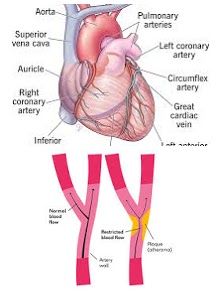
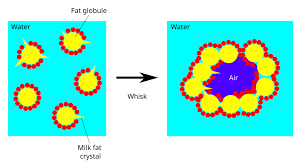 An additional aspect that emerges from these posts concerns our understanding of ‘innovation’. We have sought to demystify it as a cultivable way of thinking, acting and living and not an exotic endeavor that is the exclusive preserve of a few. An earlier example of this was a hypothesis of sorts presented in post no. 26 (Matters of the heart, Coronary Arterial Disease: Part II), for the initiation of fatty streak formation on coronary arterial endothelia. A possibility was proposed thru the simpler phenomenon of the phase reversal in beating cream into butter when crowded fat particles coalesce into a separated fat phase that we call butter. Incidentally, such turbulence because of a ‘pressure drop’ in the branches of the coronary artery probably represents a rare case where man can potentially improve upon nature’s evolutionary design by redesigning how the aorta supplies blood to the myocardium. Far from being an affront to the mind-boggling skills of cardiologists and cardiac surgeons, this is meant to be a potentially useful suggestion to them and an indication that diverse streams of pursuit of knowledge can sometimes merge to create a larger whole.
While we are at it, let us demystify ‘innovation’. A glass bottle sterilized by holding it inverted over the steam spewing from the top vent nipple of domestic pressure cooker while cooking daal. Drum stick (Moringa), bitter guard (karela), goose berry (amla), mint leaves (pudina), raw mango wedges….dehydrated at home using any combination of sun drying, osmotic drying and oven drying. Finding a way of grinding yearly supply of whole dry red chillies at home. Finding a delicious use of left over roti or daal. Using fine rolled oats powder as a replacement for starchy custard powder. Many more that you have come across while criss-crossing this blog.
To paraphrase what David Ogilvy told one of his assiatants decades ago: innovation is not an esoteric pursuit of a few; it is the next thing that you need to do.
Material technologies and today’s ‘technologies’:
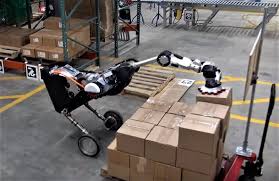
Technologies of materials like civil construction, foods and pharma, transportation, textiles, dyes and intermediates, plastics and paints etc have evolved enough to slow down their further progress. The excitement around computing-centric technologies like IT, ITES, ML, automation, robotics etc. has been so overwhelming of late that they have crowded the ‘material’ technologies out of our collective conscience and come to define ‘technology’! In the ultimate analysis, however, these modern technologies are meant to underpin the developments in material technologies, e.g. robotic stacking of goods in sprawling warehouses of organized retail, collection, analysis and processing of mammoth data to discern trends in healthcare industry and computational fluid dynamics.
This post is an ode to the broadest sense of ‘technology’ – a word that we use casually everyday.
What is ‘technology’? How does it evolve?
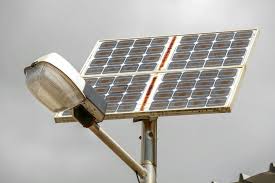
It is difficult to avoid a mention of ‘Technology’ in any conversation today. Obviously, it is much more than computing-enabled processes and much more ‘material’ than that. Ironically, most would struggle to formally define it given its many facets and manifestations. My favorite is: “Technology is applied science”. (Simplicity again!). Applied for betterment of human life – the elevators in apartment blocks, the cars (even the manually driven ones!), the domestic cooking gas burner and its pressure regulator, the domestic pressure cooker, the PET scan for locating and staging cancer, the ‘vegetarian’ meat, the solar powered street lights…….
But wait. Technology, like human beings, evolves with a life of its own; pushed by scientific discoveries and pulled by market forces. A few examples.
 The photoelectric effect and tapping of solar energy: Some people think that Einstein won his Physics Nobel for his celebrated Theories of Relativity. (A confession: I don’t really understand them.) In reality, in 1905, he worked out an elegant explanation for the then already known Photoelectric Effect. In 1900, Max Planck had already made the epochal announcement (the greatest of all time?) about the particle nature of light (E = hv). The genius took a cue from this to propose a unique ‘work function’ for metal surfaces and explained why, below a certain minimum threshold frequency, the metal surface receiving light will not develop any surface potential at all. The Nobel came in 1922; given how it is changing human life today, the delay looks scandalous. Of course, the plank was provided by old Max.
Today, the conversion of sunlight to electricity (and sometimes, heat) is everywhere. The driver for this technology was the serious alarm about the environmental pollution, ‘Global Warming’ and fossil fuel depletion, mainly in this millennium. Today, solar powered cars, homes, evaporators, street lights, water desalination… save fossil fuel and the environment at low cost of operation – the main consumable is free!
Gujarat covered parts of its extensive network of water canals with solar roofs and saved massive quantities of water from being lost by evaporation during its hot summers while lighting up lives in adjacent villages. The evolution of this technology has centered around finding exotic surfaces to irradiate with sunlight to generate maximum electricity. (Note how the electricity-producing surfaces have to adapt to what is available for free.) Imagine! A mere explanation of an oft-observed phenomenon becoming so ubiquitous.
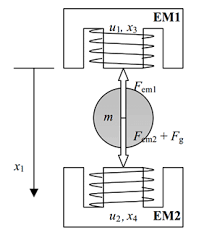
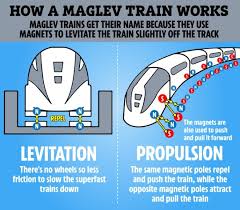 ‘Maglev’ technology: An iron sphere can be suspended in air without any physical support if its weight (w = mg) is exactly balanced by a non-contact force – two equal and opposite vectors. Now the weight of the sphere is constant and hence the opposite force has to remain constant. So this force has to be so created that the factor causing it has a known relationship with it and can somehow be kept constant. A magnetic field induced by DC electric current passing thru a ‘solenoid’ (a reel of tightly wound wire) in the planned direction can be such a force. So the sphere, when placed in such a field can be ‘magnetically levitated’ if the DC current has the right, constant magnitude and direction.
The development of this technology turned to developing a control circuit that will take in the AC current available from the switch board and send a constant magnitude DC current thru the solenoid. That done, low and behold, you have an iron sphere suspended in air. (Maglev = magnetic levitation.) This was too interesting a thing to not find wide practical applications.
Maglev trains not resting on, or even touching, the I-beam tracks have the tremendous advantage of minimal resistive forces in its fast horizontal motion with minor forward thrust. China, South Korea and Japan have them but note: the proposed so called bullet train between Ahmedabad and Mumbai (India) is not a maglev train. There have been unconfirmed recent reports of levitated houses in Japan which are immune to their perennial curse – the earthquakes. Necessity is the mother of invention. Marta kya na karta? But the point is: how technology evolution and desire for better life feed on each other.
Vegetarian or plant source meat: Sounds like an oxymoron, doesn’t it? But it has been there for ages and has, of late, found resonance among foodies. Probably, vegetarians like the thrill of experiencing meat without guilt and cringe. And non-vegetarians wonder what the fuss is about and, those with conscience like the idea that no life was lost in making the dish/product.
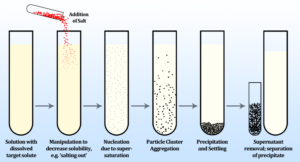
That proteins are natural biopolymers of amino acids has been known for ages. The partially charged ‘peptide’ linkages linkages (-CO-NH-) and abundant free –NH2 and –COOH groups on the polymeric chains impart an interesting property to a class of proteins: they dissolve in water under alkaline conditions (pH > 7) and separate out (precipitate out) when the conditions turns acidic (pH < 7). The dissolution happens because of differential ionization of –COOH and –NH2 groups which make the polymeric chain charged or spot ionized. These get surrounded by polar water molecules (i.e. get hydrated) and this is aided by the natural repulsion between those charges.
When the solution turns acidic, at a particular pH (the iso-electric point of the protein) the molecules become electrically neutral as a whole because of the modified ionization of amine and carboxylic acid groups. The inter-molecular repulsion vanishes and water molecules can no longer keep polymeric chains apart, resulting in separation or precipitation.
A selected natural source (like deoiled soybean flour or chickpea flour or pea flour) having predominantly this class of protein, when mixed with alkaline water will make a good amount of protein go into solution leaving behind the undissolved part in suspension. The clear solution resulting from filtration contains dissolved protein. When a mineral acid is added to this, the condition will quickly turn acidic separating pure protein, called ‘protein isolate’.
Now proteins naturally have a ‘stretchy’ texture – cheese, wool, skin, nails, silk are examples. Gluten, the principal protein in wheat imparts stretchability to the dough unless shortened with an oil/fat. (Ref post no. 32, Cooking with edible oils: Part I, Oils as cooking ingredients and dish accompaniments). Thus ‘threads’ or ‘strings’ of proteins when bundled, bound with, say gluten and colored and flavored intelligently, look and, importantly, feel like a chunk of meat.
To enhance this effect, the aforesaid precipitation is brought about by sending jets of dissolved alkaline protein solution into an acid bath (e.g by forcing the solution thru a fine sieve) whereupon, thready bunches are formed. When these are ‘spun’, they become even more ‘springy’ or ‘muttony’ and the product is appropriately called ‘Textured Vegetable Protein’ (TVP). At the same time, an extruded piece of, say, defatted soy flour (roughly half of it is protein) also resembles a mutton chunk.
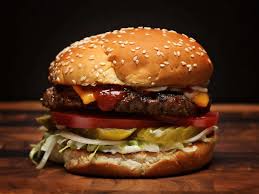 In the west, the burger patties have historically been made from mutton and chicken. Over the last few years, TVP patties have been going into differentiated, popular burgers called ‘Whoppers’. Connoisseurs swear that they can’t tell a meat patty from a TVP patty. Note that the TVP patty is a ‘formulation’ containing spices and seasonings with a potential to disguise taste differences. So protein dissolution and precipitation, known for ages, turns TVP and ‘Whopper’!
(Actual details in today’s practice may vary a little but the point is how protein solubility and precipitation became dissolution-filtration-precipiatation-texturization-bundling- formulation-patty-Whopper!)
In the coming posts, we will look at ‘hydrogenation of edible oils for food applications’ as a technology and see how it evolved before being self-righteously booted out! And later still, why it should not be!
Next Post:
Technology of hydrogenation of edible oils for food uses – I
How it was born, how it spread and why it is in this blog
Visit Disclaimer