Post #43: Technology of hydrogenation of edible oils for food uses – III : Evolution of hydrogenation technology
Like all technologies, hydrogenation has had its own ‘market-pull, science-push’ trajectory and unfortunately, its own, long drawn out, emerge-submerge fate!
Evolution of the process condition-product quality linkages
In the previous post, we touched upon the conditions-trajectory-product quality-product functionality linkages, essentially the relative rates of the series hydrogenation of PUFA to MUFA to SFA and parallel isomerization of cis bonds to trans. (We are deliberately ignoring positional isomerization that results from migration of the residual double bonds up and down the aliphatic fatty acid chain as a negligible factor in every way.) An important subtext is the relative rates of PUFA-MUFA and MUFA-SFA transformations, mainly at low ∆I stages. Given the critical nature of the effect of reaction conditions on the product quality (and hence functionality and hence the commercial success), it was natural to expect the research on that aspect to gain top priority.
It started soon enough, mainly in the US. Today the US has a daunting accumulation of research output that bears all the markings of the exertions in a resourceful environment. Interestingly, IV reduction has been the rational indicator of progress of hydrogenation because the reduction in unsaturation was the primary purpose and measuring instantaneous IV’s in the lab for research hydrogenation was possible if cumbersome but obviously acceptable as ‘research effort’.


Ironically, the TFA first come to prominence when their importance as ‘costless’ partial simulators of hydrogenation began to be understood. The harm potential of TFA was then nowhere on the horizon and trans promotion became attractive. Its extents were important both for partially improved oxidation resistance and what they did to the ‘melting profile’ evolving during the reaction. Eventually, hydrogenation fell from the grace but not before it was discovered (ironically) that mother’s milk contains more TFA than vegetable oils and that the commercial versions of the celebrated nutraceutical – CLA – were largely concoctions of TFA! Indians, of course cannot be put off by the TFA in desi ghee – the anhydrous milk fat – that they absolutely relish!!
Here’s an overview of how a defined task can derive sustenance of its own to drive extended exertions. The task: to establish those linkages on a pilot scale, meant to brief the commercial processors on what to expect from condition changes.
The essence of experimental methodology:
- Io, ∆I and the product quality: The product quality parameters changing during any duration of the reaction (result of its trajectory) are IV (I = Io – ∆I), the TFA levels and, as a result, the ‘solid fat content at various temperatures’ and the oxidation resistance. At the microscopic level, for any hydrogenation cycle length ∆T, leading to a given ∆I, the variations across batches of the same oil would be in relative residual levels of linolenic, linoleic and oleic acids (and their isomers), increase in stearic acid and increase in TFA without any contribution to ∆I. These are the real product quality indicators.
Note: ∆I/∆t is the average hydrogenation rate during ∆t; instantaneous dI/dt could be increasing or decreasing instantaneously during ∆t, depending upon the reaction stage and conditions with, I per se’, always decreasing. The dI/dt rate during isothermal-isobaric reaction should continuously decrease except for the interesting variations in this decrease because of the differential hydrogenation rates of the cis and the trans double bonds. It is these complexities that make this field so exciting and educative.
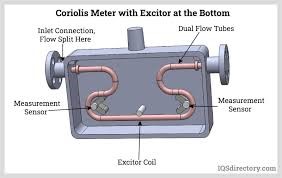
 The only thing externally indicating the reaction progress or ∆I, was (and continues to be) the chemical hydrogen consumption (as reflected in reduction in hydrogen stock) in absence of mass flow transmitter. Of course, drawing of intermediate samples from the reactor was possible and not objectionable given the ‘experimental’ nature of the exercise. Quite possibly, the significant and unaccounted for hydrogen losses necessary for drawing such samples, mystified the correlation between the ‘hydrogen consumption as indicated by the depletion in the bulk stock’ and observed ∆I. Equally possibly, this led to the instinctive clamour for the in-line IV measuring instrument. Such samples revealed instantaneous IV relatable with the melting profiles thru the intermediation of isomerization.
Note: Chemical hydrogen consumption = Physical hydrogen consumption – hydrogen losses because of leakages and venting.
- Specific experiments – keeping all conditions constant except one : A specific process condition was varied (e.g. temperature of hydrogenation) across experiments in a set and the others were kept scrupulously constant throughout. Thus ‘variation of IV with time’ at temperature T, (from initial original and natural IV ‘Io’ at time ‘zero’ to IV ‘I’ at time ‘t’ which was the duration of hydrogenation) was established. Repetitions at temperatures T1, T2, T3…….Tn on a specified starting oil, at fixed pressure ‘p’, with a given catalyst supplied by Company X at a stated usage level, in a given lab reactor, at fixed agitator speed yielded ‘n’ plots of IV vs time at those temperatures.
Obviously, these were also the IV-based kinetic curves at these temperatures and fixed other conditions. The instantaneous rates vs time (dI/dt vs t) and vs instantaneous IV (dI/dt vs I) plots could mathematically not have been difficult to derive from these plots thru slopes of tangents at various times and instantaneous IV. Obviously, each sample offered the possibility of finding the ‘metling profile’ (SFC at various standard temperatures) at the IV of that sample.
(The non-linearity of the dI/dt vs I curve – mathematically impossible for a first order, monomolecular reaction – implies variations in ∆Ea, potentially the Arrhenius Constant ‘A’ and the molecularity of the reaction. (Possibly, the lack of perfect homogeneity would contribute some deviation from linearity.) We will take up the fundamental, seemingly unarguingly accepted flaw of ‘IV as double bond concentration indicator’ later. The differences in the Ea of hydrogenation of the aliphatic cis and trans bonds is an established fact. Thus some of the hydrogenation happens thru the isomerization-hydrogenation route. Energetically, same heat release in two steps in compliance of Hess’s Law of Constant Heat Summation. We will see later if these insights can be exploited by leveraging hydrogenation thermochemistry to indicate tdb formation. Wouldn’t that be great, if possible?)
- Other experiments: The same procedure was repeated for other process parameters.
- The data set: Thus a matrix of information was generated that indicated how a clean batch of a given pre-analysed and characterized oil would hydrogenate under various conditions.
This methodology also threw up some mathematically elegant curves e.g. the ‘log IV vs t’ curve for a specific hydrogenation episode that was loaded with kinetic meaning, especially in their deviation from ‘assigned kinetics’ – another manifestation of the aforesaid factors unique to oil hydrogenation. But the most interesting and exploitable aspect was the gradual ‘straightening’ of this curve – form curvature towards time axis to straightening to curvature away from time axis.
The triumph of this research




Processors gleefully derived their SOP’s for various oil-final product combinations and churned out millions of tonnes of hydrogenated stocks over decades (including vanaspati in India) allowing production (and consumption) of zillions of tonnes of processed and cooked products and dishes. This must be considered a major triumph of lab research, adoption and adaptation by industry and admirable ‘staying in step’ by the Instrumentation & Control industry which allowed sustained shop floor successes.
The slippages
- The extrapolation of lab scale experiments described above to industrial scale must have been challenging, as always. In this context a low cost but scientific adaptation of the commercial batch reactor as a ‘research reactor’ (coming soon) can be illuminating.
- During many stages in Industrial practice (especially the kind that was described as my experience earlier), the temperature and the pressure of hydrogenation vary simultaneously, distorting both the rate and the trajectory. In fact, in the aforesaid ultramodern version of very fast industrial scale process, the reaction conditions adapt to maintain a rate that will ensure timed completion. What it does to the trajectory is another matter.
- The presumed sanctity of ‘fixed reaction conditions for a given batch’, enabled by I & C advances, can entrench the concept of which fixed conditions are good for which product from which oil. In reality, advances in I & C and Computer Science offer the possibilities of varying process conditions almost continuously in tune with increasing ∆I for a given oil to steer the reaction more meaningfully.
- Perhaps the experiments could have been milked for more info mileage, a typical perspective stemming from limitated resources.
- The selection of IV as ‘indicator of concentration of unsaturation’. It can be easily shown that…..
[db], mols/lit = 0.0394ρI……………………………………………………………1
where ρ is the density of the reaction mixture at the corresponding ‘I’ and temperature T during a specified reaction cycle. This ρ can be determined. Let’s avoid repeating the flaw of IV in kinetic equations.
Other evolutionary developments in hydrogenation of oils
- The development of the ‘Loop Reactor’ already described earlier.
- The continuous mode of hydrogenation.
- The highly automated and computerized mode of ‘ultramodern’, excessively fast, ‘forced to meet the deadline’ hydrogenation.
- A preferentially trans-hydrogenating catalyst!
Some more daydreaming coming soon!
Next Post:
Technology of hydrogenation of edible oils for food uses – IV
The present status of the technology and its products
Visit Disclaimer